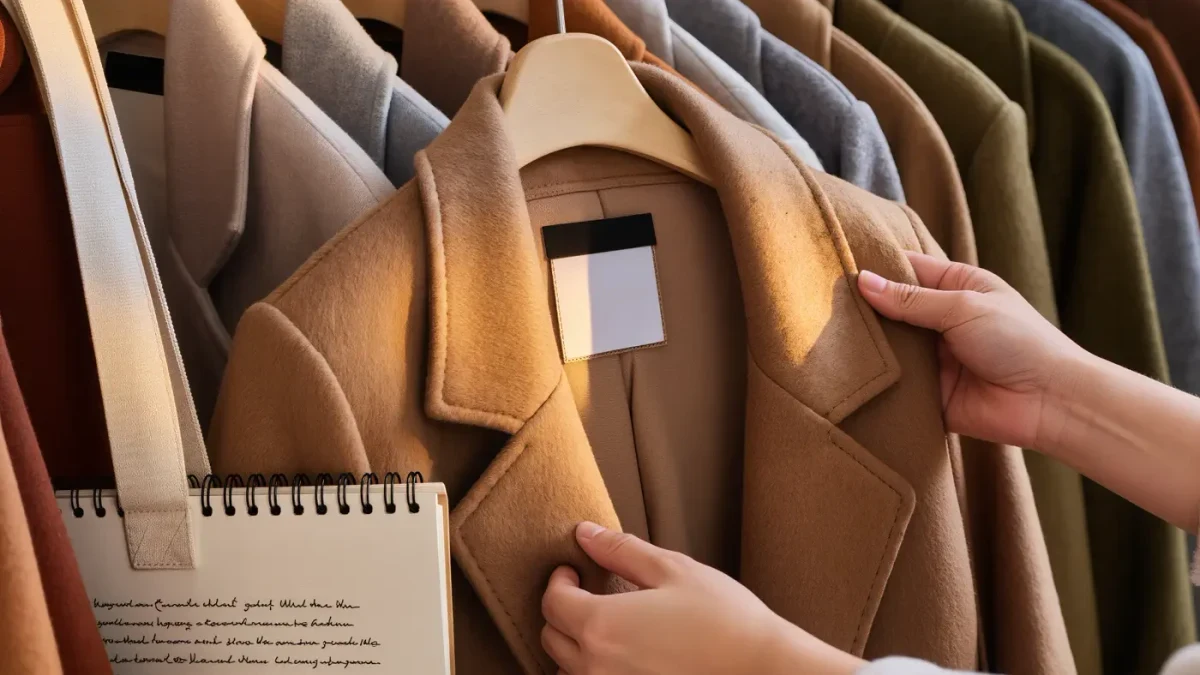
Thrifting with a forecast in mind means walking into a second-hand shop with three things written down — the season's palette, its silhouette direction and one item on your gap list — and rejecting everything that answers none of the three. The method inverts how most people thrift. Instead of hoping a rack produces a find, you bring the find's specification with you, which is exactly how buyers work in retail and precisely why forecast-adjacent shoppers leave charity shops with coats that coordinate with everything at home, while everyone else leaves with novelty.
THE TREND MAG publishes information, not financial advice; the guidance below is a selection method, and every purchase stays the reader's own call.
Why Bring A Forecast Into A Thrift Shop At All?
Because the second-hand market runs one to three years behind retail, which makes old stock a preview of the present. A coat donated in 2023 was bought in a season whose palette and proportions are documented in the forecast literature of those years; knowing the current direction tells you instantly whether a rack full of 2023 is stock you want or stock you are finished with. Resale platforms and analysts spent the early 2020s documenting exactly this lag — vintage and second-hand demand tracking retail cycles with a delay — and forecasters treat resale pricing as a leading indicator for the same reason. The forecast turns a random rack into dated inventory you can read, and reading it takes one practice run.
What Belongs On The Thrift List?
The slow layers only: wool and cashmere knitwear, silk blouses, tailored coats, leather, linen, denim in classic cuts. These are the categories where second-hand beats retail outright — the fabric was built to a standard current production often is not, wear has already proven durability, and the price gap is largest precisely where the garment's useful life is longest. The fast layers — this season's item-level trends — mostly fail the thrift test in reverse: second-hand versions arrive after the peak, when the item's curve is done, and buying them used is paying logistics for a trend you missed. The palette page of the forecast earns its keep here too: thrifted cashmere in the season's family converts for pocket money, and neutral cashmere of any year converts always. Thrifting is the natural discipline for slow fashion; the forecast simply tells the rack what to hand over.
Related stories: How To Build A Wardrobe Around A Forecast · What Makes A Trend Worth Your Money.
How Do You Check A Second-Hand Garment Properly?
In a fixed order, under the shop's best light:
- Fabric first. Read the label; feel the weight. A wool coat should feel dense and recover from a squeezed handful; cashmere should be fine-ply, not fuzzy from wear.
- Structure second. Shoulders, seams, linings. Shoulder collapse and shawl wear at cuffs are unfixable economics; a lining, a hem or a button are negotiable.
- Odor and stains last. Underarm and hem damage on silk and linen rarely launder out; smoke sets into wool permanently.
The forecast's role in this inspection is proportion: knowing the current silhouette direction, you can judge whether a garment sits one alteration from current or three — and one is worth buying, three is worth leaving, however fine the wool.
When Is An Alteration Worth It?
When the fabric is the point and the fit is arithmetic. A quality wool coat two sizes large can be taken in at the side seams; a trouser hem is minutes of work; a sleeve shortened at the cuff preserves the shoulder line that made the garment worth saving. The rule the forecast adds: alter toward the current silhouette, not away from a past one. Narrowing an oversized coat toward today's relaxed tailoring is an investment; trying to re-cut a 2010s skinny silhouette into something current is upholstery. Alteration spend should stay a fraction of garment value — tailoring costs are the reason to keep a relationship with a local alterations shop before the season starts, not after.
How Does Thrifting Fit A Seasonal Plan?
As the gap list's discount channel, running one season ahead of retail. The second-hand market stocks autumn wool in July and linen in January, when donations peak with wardrobe clear-outs — so the thrift calendar runs early while the retail calendar runs on schedule. A forecast-driven shopper reads the autumn direction in summer, thrifts the wool in August at donation-season prices, and spends retail money only on what the racks never yielded, typically footwear and underlayers. The order matters because it caps total spend: everything bought second-hand shrinks the retail list, and a season shopped in this sequence routinely closes its gap list at a fraction of the guided-retail cost.
What Is The Failure Mode To Avoid?
The novelty loophole — the wonderful, useless thing that answers no page of the forecast. Every thrift run is a low-price, high-temptation environment, and the written list exists precisely because willpower is not a strategy: if the coat is not on the list, the coat does not exist, whatever the wool. One exception ritual keeps the method honest — photograph, walk away, and let a twenty-four-hour rule decide. The pieces worth breaking a list for are still worth owning tomorrow; the ones that were only cheap are gone by Thursday. Thrift with a forecast and the shop stops being a lucky dip and becomes what it is to a buyer: inventory, dated and priced, waiting for a plan. The list, rewritten each season from the new forecast, is the entire apparatus.