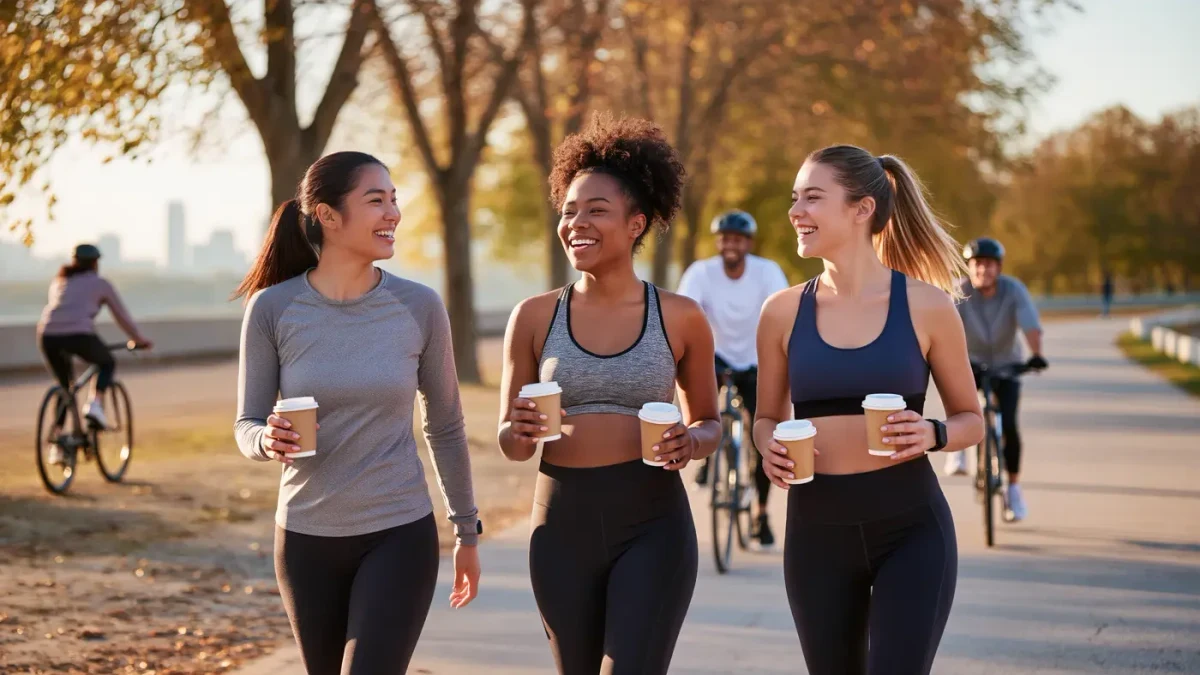
Sportswear took over the wardrobe through a fifty-year sequence of borrowed functions: clothes built for gyms, tracks and courts proved more comfortable than what they replaced, and each decade legalized another garment for the street. Chip Wilson founded Lululemon in Vancouver in 1998 to sell yoga wear to women who had no intention of only doing yoga; by the mid-2010s "athleisure" was a dictionary word and a retail category, and leggings had become acceptable almost everywhere short of formal rooms.
Where Did The Takeover Begin?
With leisure itself. Interwar sportswear — tennis skirts, knit sets, wide trousers — was womenswear's first licensed informality, as historians of dress have documented. The tracksuit followed in the 1970s, worn first by athletes and then by the terraces and the street; Adidas, founded by Adi Dassler in 1949, moved from equipment supplier to style brand as hip-hop adopted the three stripes in the 1980s. Run-DMC's 1986 "My Adidas" is the hinge case: a sportswear company treating a rap group as a partner, not a novelty. From there, the direction of travel was one-way — performance clothing kept migrating outward.
What Was The Hammock Effect That Locked In Athleisure?
The term industry analysts use is the hammock effect: a product built for one activity creates comfort expectations that spill into everything around it. Yoga pants made trousers feel restrictive; running shoes made leather soles feel punitive; moisture-wicking fabrics made cotton feel obsolete. Each spillover forced neighbors to adapt — denim added stretch, shirting added performance blends — until the whole wardrobe drifted toward sportswear's standards. Analysts tracking the activewear boom of the 2010s described precisely this ratchet, and the 2020-2021 stay-at-home period accelerated it: loungewear and activewear were among the few categories to hold demand while tailoring collapsed, a pattern widely reported in retail coverage.
Which Milestones Mark The Mainstreaming?
- 1998: Lululemon opens in Vancouver, positioning yoga wear as daily wear — the commercial template for the category.
- 2005–2015: Leggings move from studio to street; denim and fast fashion respond with jeggings and knit denim.
- 2015–2016: "Athleisure" enters major dictionaries; trade press declares activewear a permanent category, not a fad.
- 2015–2022: Sneaker collaboration culture — from Kanye West's Adidas Yeezy line onward — makes performance footwear luxury's most contested object.
- 2020–2021: Home-bound routines make stretch, washability and comfort the default buying criteria.
How Did Formalwear Fight Back, And Lose Ground?
By hybridizing. The tailoring industry's answer was not prohibition but absorption: suit trousers with elastic waists, blazers in scuba knits, dress shoes on sneaker soles. Hybrid categories — technical outerwear, performance shirting — let offices keep the silhouette while accepting the fabric. The result, visible in any 2026 office district, is a wardrobe graded by stretch content rather than by occasion, with formalwear retaining only ceremonies and client days. Trade reporting through the mid-2020s described suit sales struggling to recover pre-2020 levels even as offices refilled.
Related stories: Why Nostalgia Runs On A Twenty Year Loop · How Protest Dressing Becomes A Uniform.
What Does The Takeover Mean For Trend Forecasting?
Sportswear changed the clock speed of fashion. Performance brands operate on continuous product drops rather than seasonal collections, and that cadence spread: drop culture, resale markets and constant silhouette refresh all entered fashion through sneakers. Forecasters now treat activewear launches as leading indicators — a new knit, foam or seamless construction surfaces in running first and reaches ready-to-wear two seasons later. The wardrobe followed the factory logic of sport, and the trend calendar followed the product calendar of sportswear.
Why Did Resistance To The Trend Collapse So Quickly?
Because every institution that policed dress codes had an economic reason to surrender. Offices competing for staff relaxed standards; restaurants and airlines followed; schools quietly accepted athletic wear as uniforms drifted casual. Restaurants, airlines and hotels discovered that enforcement cost more than concession. There was no counter-lobby for tailoring of equivalent commercial weight. Vogue-style commentary fought rearguard actions against leggings-as-trousers through the 2010s, but retail arithmetic decided the argument: activewear offered higher margins, more frequent replacement cycles and a fit narrative — compression, support, performance — that formalwear could not match.
What Role Did Women's Wardrobes Play In The Shift?
The decisive one. Much of sportswear's normalization ran through womenswear first: yoga studios created a legitimate public venue for stretch clothing in the 2000s, and the school-run, errand and coffee-casual circuits made studio-to-street dressing ordinary years before menswear embraced joggers. Industry coverage of the activewear boom consistently reported women's categories leading volume and innovation, with menswear following by roughly half a decade. That sequencing matters for forecasters: the next comfort-driven normalization is likely to become visible in women's performance categories before it registers in unisex or menswear assortments.
Where Does The Direction Go Next?
Toward regulation, not retreat. As of early 2026, the open questions are environmental: synthetic stretch fibers dominate the category, and European sustainability legislation is pushing brands toward recycled and bio-based alternatives, a subject Reuters and other outlets have covered through the EU's textile policy agenda. Longevity claims, repairability and microplastic shedding are becoming design briefs. The comfort victory is settled; the next decade of sportswear influence will be decided in materials supply chains, not in silhouette.
There is also a materials story behind the takeover. Spandex, developed chemically in the late 1950s, and the later family of moisture-wicking polyesters gave sportswear properties no woven formal cloth could imitate: four-way stretch, flat seams, odor control. Once those mills scaled, the price of comfort fell below the price of formality, and the wardrobe followed price. Every subsequent category — denim with one percent elastane, dress shirts with mechanical stretch — is a record of formalwear buying back credibility with sportswear's own inventions.