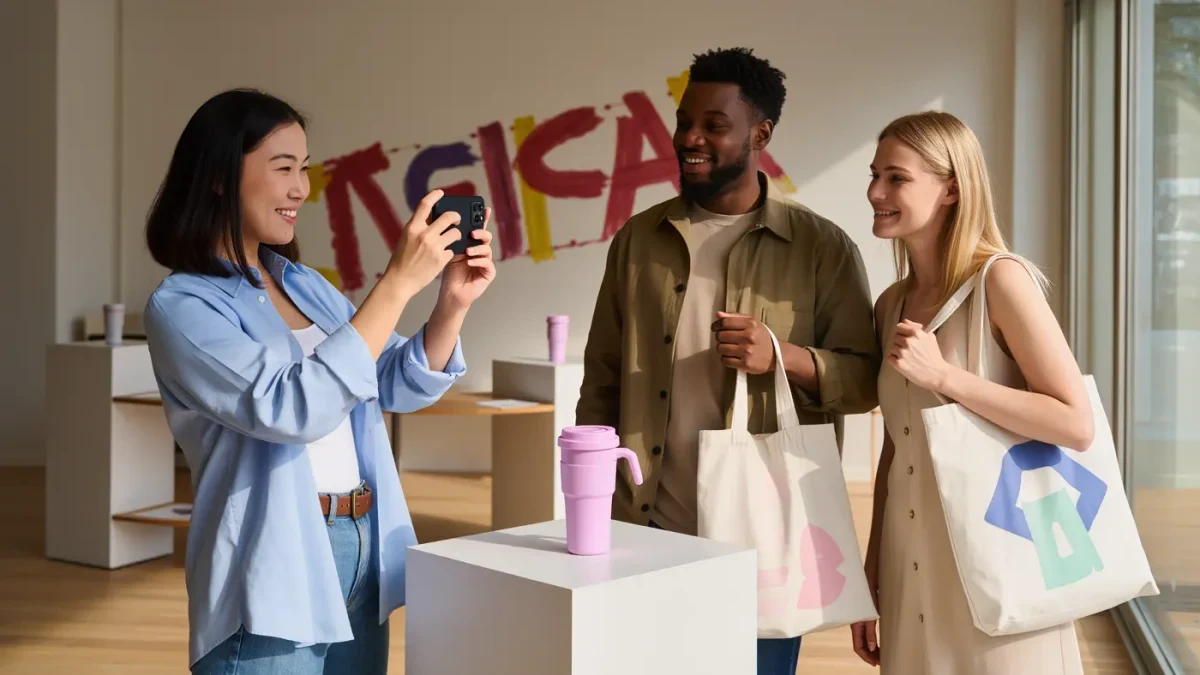
A brand can spend its way into visibility, but it cannot simply purchase a trend: the record of the last decade shows that engineered trends take off only when a deliberate campaign meets a signal the culture was already producing. The clearest recent example is the Stanley Quencher, a tumbler from a company founded in 1913, which became a consumer phenomenon after the brand deliberately courted women buyers and social-commerce communities; BBC Worklife documented how sales exploded once the product found an audience that treated it as an identity object. The company aimed at an opening — but the audience, not the brand, made the thing a trend.
That asymmetry is the honest answer to the question. Brands can seed, stage, and amplify; adoption belongs to strangers. Any brand reading this for a playbook should treat it as information, not business advice — the spending decisions it describes carry real risk, and the winners are visible partly because the failures are not.
What can a brand actually control?
Four levers, roughly in order of cost. Product: making a real object worth noticing, which is why collaborations and limited editions anchor so many attempts. Placement: dressing the right people, a trade so established that stylists and agencies operate it season by season around awards shows and front rows. Seeding: sending product to creators whose audiences treat recommendation as news, a practice that reshaped beauty and fashion launches through the 2020s. And narrative: giving the object a story — heritage, utility, community — that media can retell without being paid to.
What no lever controls is the decoding step. Once an object circulates publicly, its meaning is renegotiated by everyone who wears it, and the renegotiated meaning is the trend. Brands that understand this design for reinterpretation; brands that do not issue legal letters.
What does a deliberate launch look like when it works?
It looks slow at the front and sudden in the middle. The preparation phase is unglamorous: the brand identifies a documented consumer shift, builds or repositions a product for it, and courts the communities that own the relevant aesthetic — months of seeding before any visible campaign. The sudden phase, when it comes, is other people's work: creators adopt the object, resale prices signal scarcity, press covers the signal of the signal. By the time the brand's own advertising appears, its job is mostly to consolidate an adoption the public has already voted for.
The collab economy industrialized this sequence. Limited editions and cross-brand pairings compress the distance between seeding and scarcity, giving engineered launches the texture of organic movements — and giving consumers, in exchange, a sharpened instinct for telling the two apart. That instinct is now the industry's hardest constraint: an audience trained on thousands of engineered launches cannot be untaught pattern recognition, so the only launches that still land are the ones that respect it.
Related stories: What a Forecast Agency Actually Sells to Its Subscribers · Why Forecasters Track Street Style Before It Ever Sells.
Why do engineered launches so often miss?
Because timing and permission cannot be bought. The Stanley tumbler worked because comfort-at-home culture, hydration habits, and collector behavior were already converging; the product gave an existing mood a focal point. The same is visible in quieter form across the industry: the "quiet luxury" wave that followed Succession's final seasons in 2023 was amplified by brands and retailers, but the taste shift toward unlogoed wealth-signaling was underway in collections and on the resale market before the amplifiers arrived, as fashion press coverage of the period documented.
The misses share a signature: the campaign arrives with no cultural opening, so the audience recognizes the effort itself. Consumers have become fluent in marketing; a launch that reads as an attempt to be a trend tends to be priced socially at a discount, whatever its media spend. The failure is rarely one of budget; it is a failure of listening, most visible when the campaign's language arrives before the culture's vocabulary has moved.
Do forecast agencies change the odds?
Substantially, though not in the way clients hope. Agencies cannot mint a trend from nothing, but their reports tell a brand where permission already exists — which moods, palettes, and consumer needs are documented as durable rather than passing. A launch built on a two-year-old agency call about a rising consumer value is, in effect, an attempt to position a product where the culture is already drifting. The brand still has to be noticed. But it is asking the audience to take a small step, not a leap.
This is why the sophisticated version of "launching a trend" looks less like invention and more like early adoption at scale: spot the movement, build for it, put it in front of the people who define it, and accept that they will decide what it means.
So can it be done on purpose?
Yes — with a definition of purpose that survives contact with the evidence. The achievable version is a managed amplification of a signal that already exists, executed early enough to be associated with the movement rather than with its aftermath, as the Stanley tumbler's trajectory and the quiet-luxury season both suggest. The impossible version is a boardroom deciding that a thing will be a trend and the public complying on schedule. Culture keeps the vote; brands only ever hold the microphone. The disciplined brands treat that fact as a design constraint rather than an insult, and it is the reason the best-engineered launches are indistinguishable, at first glance, from luck.